


Decoy Decoy is built around competing physical and sensory experiences. In first room, objects loom over the viewer. In the second room, the human body’s inherent messiness is given leverage over institutional attempts at control.
These ideas come from a history of working with Illinois state prisons and their systems of surveillance and power. In this installation, those systems are translated into a sculptural environment where the viewer is both the observer and the observed. Referencing the idea of a technological sublime, an extension of the art-historical sublime: the feeling of awe, fear, and power produced when confronted with something larger or more powerful than oneself. Here, that feeling comes not from nature, but from bureaucratic & technological surveillance systems, and the physical and psychological structures they create.

In the first room, a vertical feedback loop creates a vortex as a TV slowly rotates, suggesting a technological purgatory or a portal into technology. To enter the frame, the viewer must place themself beneath a seemingly unstable 90-pound CRT monitor. But the design of the loop makes it impossible for the viewer to see their own face. Instead, their image watches their body, creating an absurd form of self-surveillance (occurring alongside the museum’s own security camera). This video is fed into the large white box to a secondary monitor, whose reflected light eliminates shadows and makes the space feel almost virtual.
The installation reverses the usual relationship between physical objects and technology. The large sculpture appears light and almost ghostly, while the supposedly immaterial video has a heavy, precarious physical presence. This challenges the idea of technology as something weightless or separate from material infrastructure.


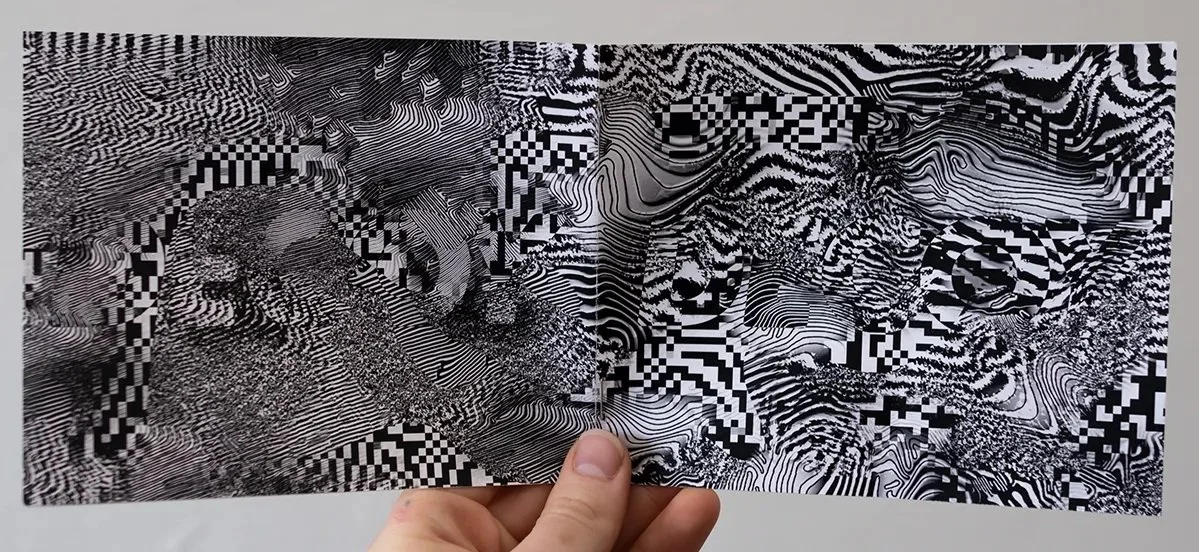
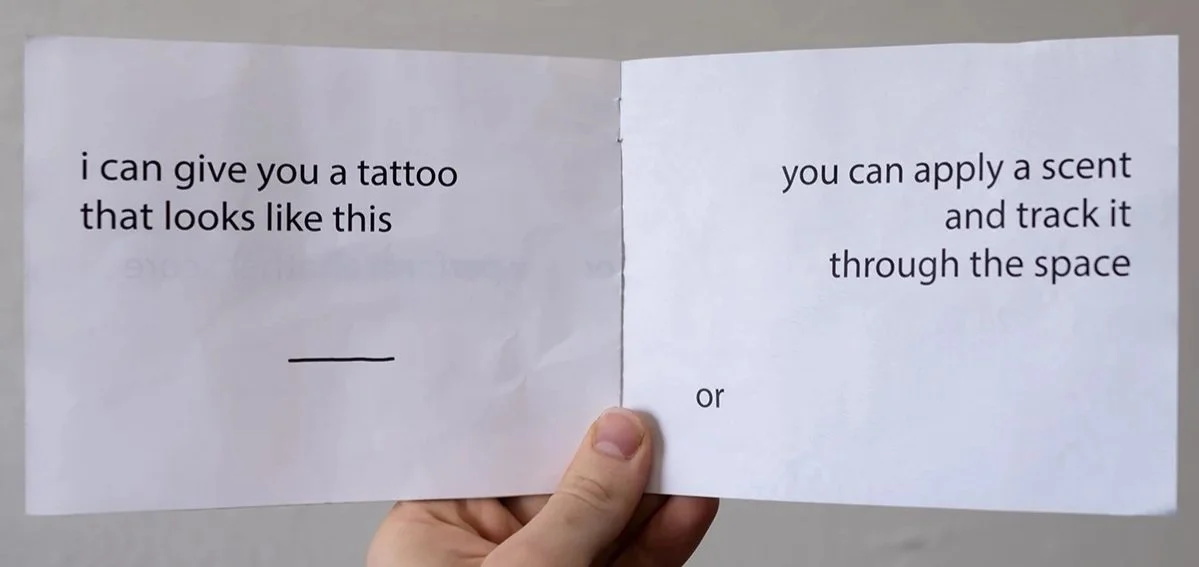
The second room involves two scores representing two ways of thinking about the body and it’s complicated relationship with obedience and conformity. Scent is temporary, difficult to define, and a powerful memory trigger — a mark left on a space by a body. The tattoo represents the opposite — permanent, observable, repeatable, and is a mark left on the body by a system. It creates a tension between the lasting nature of a symbol and the ephemerality of the body.
